

Slint SC
A memory‑safe, deterministic subset for safety‑critical applications.
Standards covered
Use all of Slint's tooling
Safety Manual
Example architecture
One display, two rendering paths
The safety layer renders in software on a separate core, and the SoC blends the primary application UI and safety-critical UI into one display.
Isolation through separate processors and dedicated safety software
Example device i.MX 95
Not certified
Application CPU
Cortex-A55 · Linux · OpenGL ES
Certified
Safety MCU
Cortex-M33 · FreeRTOS
DPUlayer blending
Isolation through separate processors and dedicated hardware
Example device STM32MP257
Not certified
Application CPU
Cortex-A35 · Linux · OpenGL ES
Certified
Safety MCU
Cortex-M33 · FreeRTOS
LTDClayer blending · RIF isolates the cores
Isolation through dedicated safety software
Example device hypervisor
Not certified
Application CPU
Linux VM · OpenGL ES · virtio-gpu
Certified
Safety MCU
QNX guest · QNX OS
QNX Screencertified hypervisor · OpenWF Display
Scope of qualification
| Obligation | Slint SC | Toolchain | You |
|---|---|---|---|
| Slint SC | |||
| A qualifiable UI subset of the Slint language | ✓ | ||
| A documented safety manual | ✓ | ||
| Slint code coverage tooling | ✓ | ||
| Memory-safe rendering, no memory allocator | ✓ | ||
| Toolchain | |||
| A compiler qualified for functional safety | ✓ | ||
| Qualification evidence for the toolchain itself | ✓ | ||
| You | |||
| Hazard analysis and risk assessment | ✓ | ||
| The system-level safety case | ✓ | ||
| Your control logic and its verification | ✓ | ||
| Final certification with your assessor | ✓ | ||
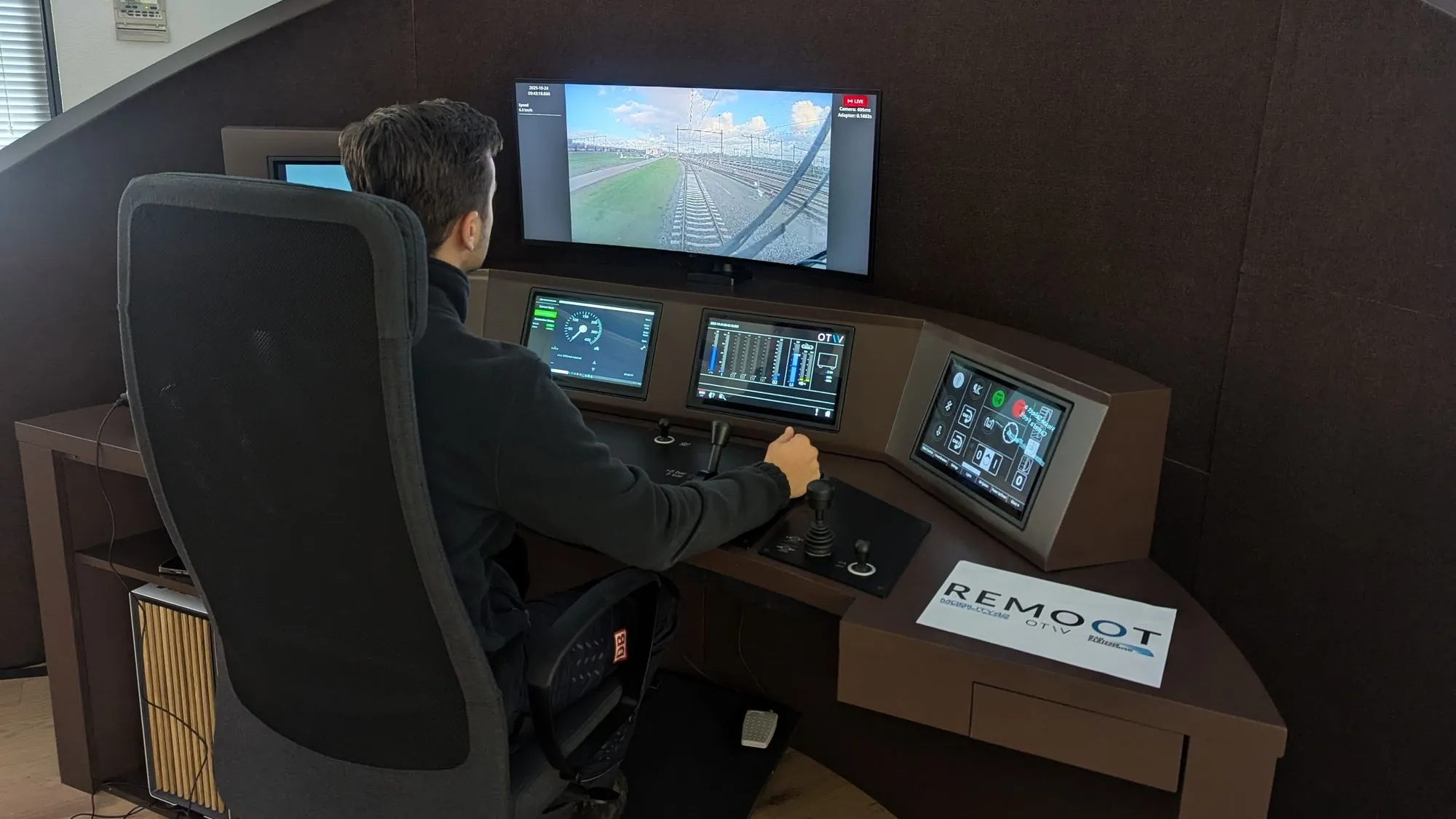
“Safe, reliable, and intuitive user interfaces are critical for our customers who depend on OTIV products to drive the future of rail automation. Slint has been an exceptional partner in helping us achieve this.”
Sam De Smet, Co-Founder, OTIV